
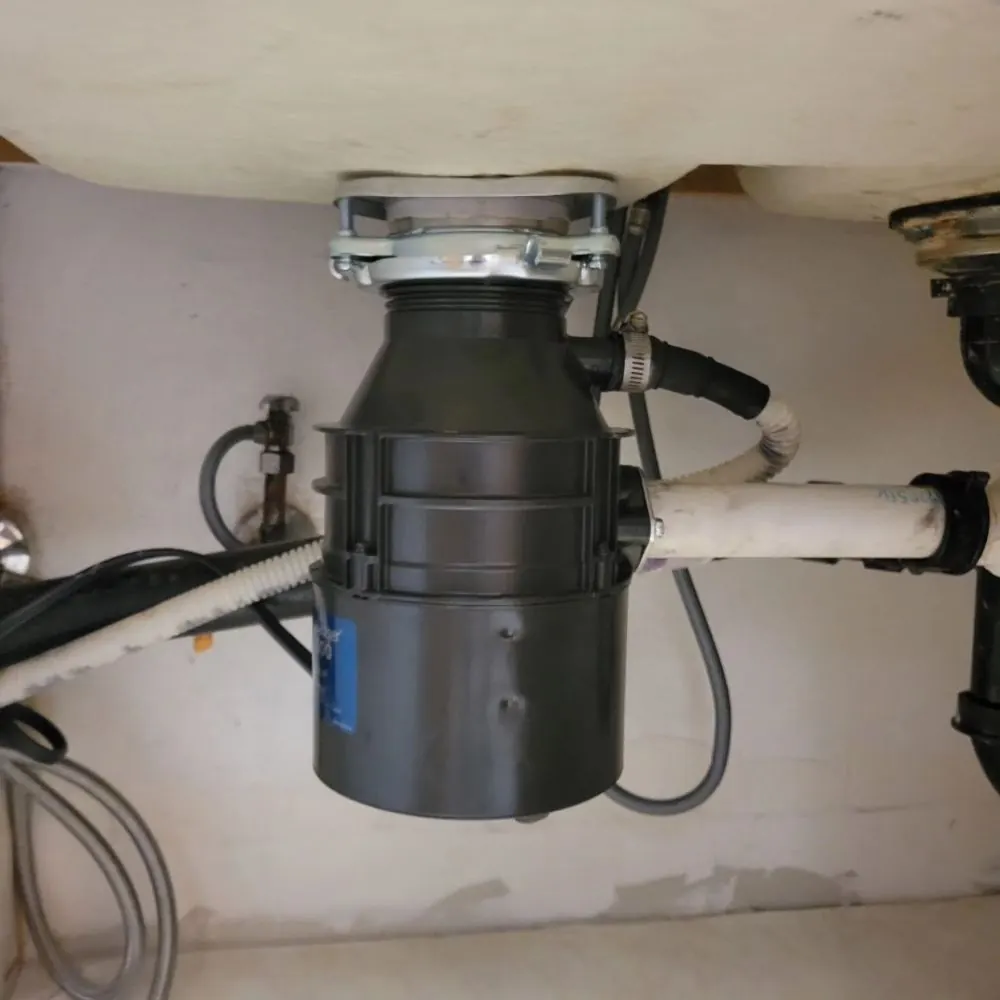
Humming but Not Spinning
A steady hum with no grinding means the motor is getting power but the flywheel cannot turn. Something is jammed between the impeller and the grind ring: a bone, a fruit pit, a bottle cap, a piece of glass, or a utensil that fell in. The motor is straining against it, and if you leave it running the thermal overload will trip or the motor will burn out.
Turn the switch off and unplug the unit under the sink or turn off its breaker. Never put your hand in the chamber. Most disposals have a hex socket on the bottom center that takes a quarter-inch Allen wrench. Working the wrench back and forth frees the flywheel in most cases. Then use tongs or pliers to lift out whatever was in there, press the red reset button on the bottom, plug it back in, and run cold water while testing.
If it hums again right away with nothing in the chamber, the bearings or the motor are failing, and that unit is at the end of its life.
Nothing Happens at All
Silence usually means no power. Check the reset button on the bottom of the unit first. It pops out when the motor overheats, and pushing it back in restores power. Then check the breaker and, if the disposal plugs into an outlet under the sink, make sure the outlet is live. Some kitchens have the disposal outlet on a wall switch or a GFCI that has tripped.
If the reset is in, the breaker is on and the outlet has power but the unit does nothing, the motor is gone. There is no economical repair for a burned-out disposal motor, and replacement is the honest answer.
Occasionally the problem is the wall switch itself or the cord. A switch that has to be flicked a few times to work is a small electrical repair that we handle along with the disposal check.
Leaking: Where It Comes From Matters
Where the water appears tells you almost everything. A leak from the top, at the sink flange, means the plumber's putty or the mounting ring has loosened. That is repairable. A leak from the side, where the dishwasher hose or the drain pipe connects, is usually a loose clamp or a worn gasket, also repairable.
A leak from the bottom of the housing, especially from the reset button area or a seam, means an internal seal has failed and water is reaching the motor. That is not repairable in any practical sense. Replace the unit before the water damages the cabinet floor.
Dry the unit completely, run water, and watch with a flashlight to find the source. Put a paper towel under it overnight if you are not sure. A cabinet floor that has gone soft or dark from a slow leak is a sign it has been going on a while, and that repair is worth doing at the same time.
- Top flange leak: reseal or tighten, repairable
- Side connection leak: gasket or clamp, repairable
- Bottom housing leak: internal seal, replace the unit
- Soft or stained cabinet floor: repair the cabinet too
Drains Slowly, Smells, or Backs Up Into the Other Sink
A disposal that drains slowly or sends water up into the second bowl is usually not a disposal problem. The drain line past the disposal is partly clogged, often with grease and food that has built up over years. Running the disposal more will not help. The trap and the drain line need to be cleared.
Smell is almost always from food residue on the underside of the splash guard and inside the chamber. Scrubbing the rubber guard, running ice and a little citrus peel, and letting cold water run for a full thirty seconds after each use keeps it clean. A persistent sewer smell that does not go away points to a dry trap or a vent problem instead.
If the dishwasher is backing up into the sink, the knockout plug in a new disposal may never have been removed, or the dishwasher hose is not looped high enough. Both are quick to fix.
Hard Water and Why Valley Disposals Age Faster
The Phoenix area has very hard water, and mineral scale builds up inside the grind chamber and on the impellers over years. Combined with summer heat in a closed cabinet and a unit that sits unused for months in a seasonal home, seals dry out and bearings stiffen. A disposal that lasted fifteen years back east may give eight to ten here.
You cannot change the water, but running cold water during and after every use, avoiding fibrous and starchy waste, and running the unit at least weekly in a house that is lightly used all help. Our hard water guide covers what the same minerals do to faucets and valves.
Repair or Replace: How We Decide
If the unit is less than five years old, is jammed, has a loose flange, or has a tripped reset, repair makes sense. If it is older than eight years, leaks from the housing, hums with an empty chamber, trips the reset repeatedly, or has visible rust at the bottom, replacement is the better use of money. Labor to diagnose and repair an old unit can approach the cost of swapping in a new one, and the new one comes with a warranty.
When replacing, matching the horsepower to the household matters more than brand. A half horsepower unit is fine for a small household. A three-quarter or one horsepower unit is quieter and handles more. We can bring the unit or install one you have purchased.
A replacement is normally a one-visit job that includes removing the old unit, resealing the sink flange, connecting the drain and dishwasher line, testing for leaks and taking the old unit away. If the cabinet floor under it is damaged, that is extra, but we will show you before doing anything.
What Should Never Go In
Most jams and early failures come from the same short list of items. Fibrous vegetables like celery, corn husks and onion skins wrap around the impellers. Starches like rice, pasta and potato peels turn to paste and clog the drain line. Grease solidifies in the pipe. Bones, pits and shells either jam the unit or wear it out. Coffee grounds settle in the trap.
If you want to keep a disposal working for years in Valley water, treat it as a way to clear small scraps from the sink, not as a second trash can.
- Fibrous vegetables, husks and peels
- Rice, pasta, bread and potato
- Grease, oil and fat
- Bones, fruit pits and shells
- Coffee grounds and eggshells in quantity
“Nathan was super knowledgeable about alot of things he repaired a toilet and a ceiling fan that was wobbly. Super friendly and very thorough. Give him a call for all your handyman needs!!!”