
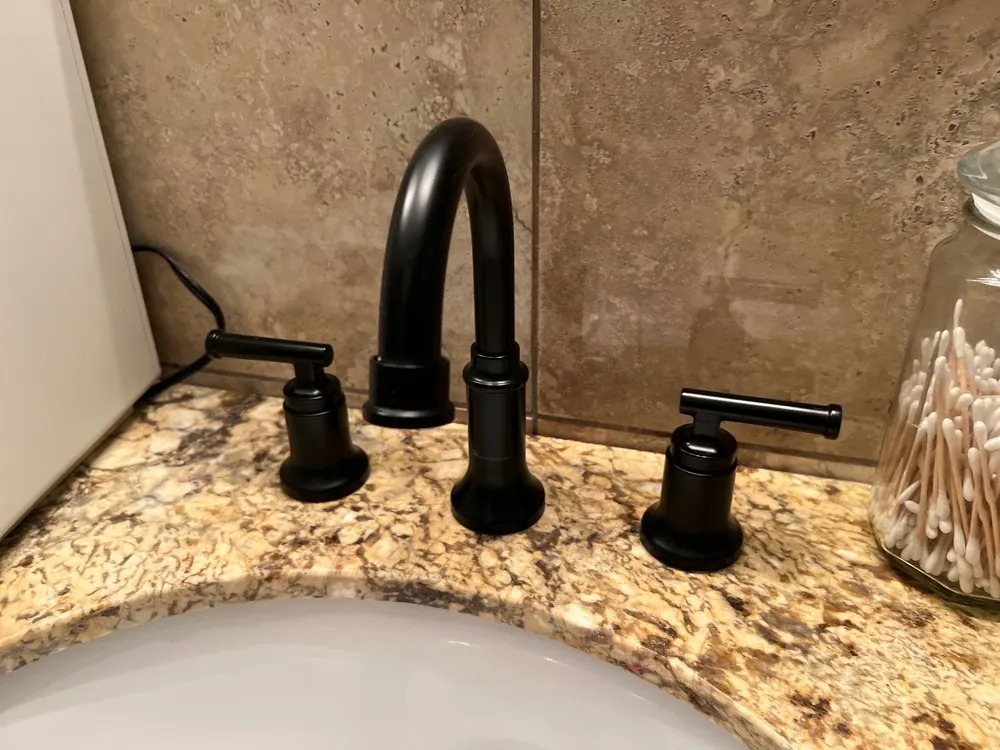
What Hard Water Actually Is
Hard water simply means water carrying a lot of dissolved minerals, mostly calcium and magnesium. Those minerals are harmless to drink, but when water evaporates or heats up, they stay behind as a hard, chalky deposit called scale.
In the valley, the combination of mineral-heavy water and a hot, dry climate makes scale build up quickly. Water dries fast on faucets and glass, leaving the minerals behind. Hot water heaters concentrate it further, because heat causes minerals to come out of solution.
None of this is a defect in your home. It is simply the water, and the fixtures inside your house need regular attention because of it.
Where You See the Damage First
The most visible signs show up on faucets and showerheads. A white or greenish crust forms around the base of the spout, the aerator screen clogs, and spray patterns become uneven. These are annoying but easy to fix when caught early.
Behind the scenes, scale builds inside cartridges, valves and supply lines. A faucet handle that feels stiff or gritty, a toilet that keeps running because the fill valve is crusted, or a dripping spout that will not stop are all common results.
Water heaters and dishwashers suffer too. Sediment collects at the bottom of a tank water heater, reducing efficiency and making noise as it heats. Appliances with heating elements can lose performance as scale insulates them.
Scale also hides inside showerheads and dishwasher spray arms, where you may not notice it until performance drops. If a showerhead has lost pressure or a dishwasher leaves film on glassware, check these parts before assuming something larger has failed.
- White crust at faucet bases and around handles
- Clogged aerators and weak or uneven shower spray
- Stiff, gritty or leaky faucet cartridges
- Toilets that run or refill slowly due to scaled fill valves
- Popping or rumbling noises from the water heater
Simple Maintenance That Helps
The easiest routine is cleaning aerators and showerheads. Unscrew them, soak them in white vinegar for a few hours, and brush off the loosened scale with an old toothbrush. Do this a few times a year and spray quality stays much better.
Wipe fixtures dry after use if you can. It sounds fussy, but removing water before it evaporates removes the minerals with it. A quick squeegee of the shower glass does the same.
Be careful with strong acids on finished surfaces. Some finishes, such as brushed nickel, oil-rubbed bronze and certain coated fixtures, can be damaged by harsh cleaners. Check the manufacturer's guidance, and test in a hidden spot.
For stubborn buildup on fixtures that cannot be removed, soak a cloth in vinegar, wrap it around the crusted area, and leave it for a while before wiping. Rinse well afterward so no residue remains on the finish.
When to Repair and When to Replace
A fixture with moderate scale can usually be cleaned and kept. But if the cartridge is worn, the finish is pitted or the body has corroded, replacing the whole faucet is often more sensible than repeated repairs.
Replacing a cartridge or washer is a small job that can restore a faucet that drips or sticks. If the faucet is old and parts are hard to find, a new fixture may cost less in the long run, especially once you add labor for repeated visits.
Shutoff valves under sinks and toilets are another trouble spot. They often seize after years of scale and may not close fully, or may start to drip when turned. If you cannot shut off water to a fixture, have the valve replaced before you start any other repair.
Choosing replacement fixtures with solid brass internals and easily replaceable cartridges makes future repairs simpler. Cheap fixtures with sealed parts often have to be thrown away entirely when scale gets into them.
Water Softeners and Filtration: What to Know
Some homeowners install a water softener to reduce mineral content throughout the house. Softeners can make a noticeable difference for fixtures and appliances, but they require installation, salt or other maintenance, and may be subject to local rules. Check with your city and your HOA before deciding.
Under-sink or showerhead filters can reduce some buildup for a single point of use. They are not the same as a whole-house system, so set expectations accordingly.
Whichever route you choose, the basics still apply: clean aerators, replace worn parts, and keep an eye on the water heater. We are not water treatment specialists, so for system recommendations consult one.
Water Heater Care
Tank water heaters benefit from periodic flushing to remove sediment, according to the manufacturer's instructions. If you are not comfortable draining a tank, have someone do it. A heater that makes popping noises or heats slowly may be telling you it needs service.
Check the area around your heater for dampness or rust stains. A slow leak at a fitting or valve is much easier to correct than a failed tank flooding a garage or closet.
If your heater is old, plan ahead. Replacing a water heater can involve permits and licensed trades, so it is a good idea to line that up before an emergency.
Also consider the anode rod in a tank heater, which protects the tank from corrosion and wears out over time. Having it inspected during service can extend the life of the tank in hard water conditions.
Getting Help
Most hard water fixture problems fall into the category of small plumbing repair: swapping faucets, replacing cartridges, fixing running toilets, and replacing shutoff valves. Those are routine handyman jobs.
Charme and Sons handles fixture-level plumbing repair across the northwest valley, and we are happy to look at several items in one visit.
“Nathan from Charme & Sons did our son's bathroom conversion from tub to walk in shower and we are very pleased with how everything turned out, see attached before and after pictures. Nathan was competent, reliable and reasonable. Will definitely use him again...”