
Drywall Repair in the Phoenix Area
A good drywall repair disappears. We patch, tape, mud, texture and paint so the wall looks like it was never damaged, whether it is a doorknob hole or a ceiling stain.
What We Do
- Hole and dent patching
- Crack repair and re-taping
- Texture matching (knockdown, orange peel, skip trowel)
- Water-stain ceiling repair
- Popcorn ceiling spot repair
- Paint touch-up to finish
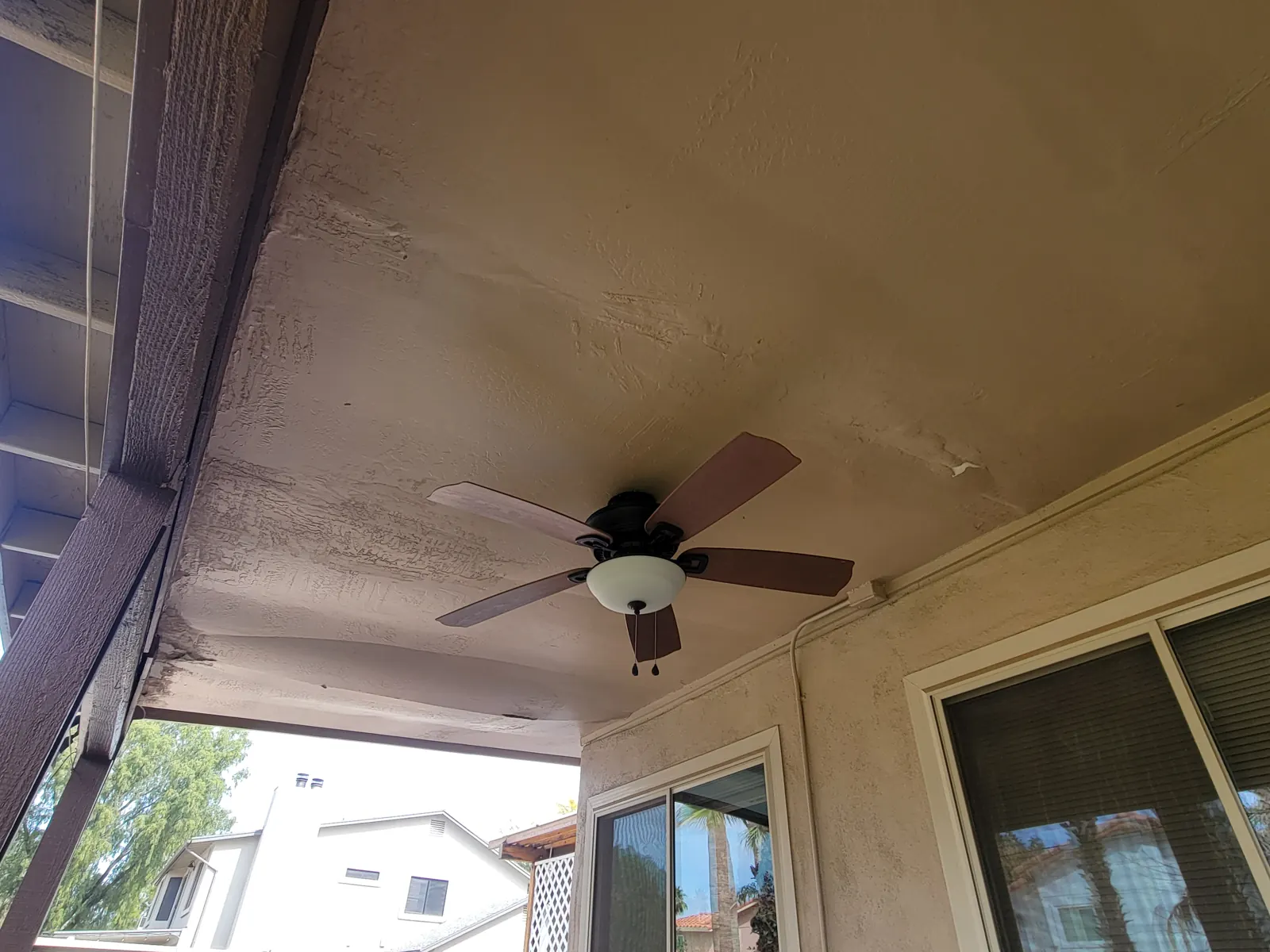
Most drywall damage looks worse than it is, and a few kinds look harmless and are not. A dent from a doorknob is cosmetic, but a ceiling stain, a crack that keeps coming back or a bubbling seam is usually telling you something about what is happening behind the wall. This guide explains how we read the damage, how we repair it, and where Arizona homes behave differently from the textbook.
Signs a wall or ceiling needs attention now
Some drywall problems can wait for a weekend. Others cannot. A brown or yellow ring on a ceiling, a soft spot you can press in with a thumb, paint that bubbles or peels in a patch, or a musty smell near a wall all point to moisture, and moisture is the thing to chase before anything gets covered up. A fresh coat of paint over a damp board only hides the problem for a few weeks.
Cracks deserve a closer look too. A hairline crack running up from the corner of a door or window is common and usually just seasonal movement. A crack that is wider than a credit card edge, that shows a step where one side sits proud of the other, or that grows noticeably over a few months is worth having someone look at before it is patched.
- Stains that grow or change color after a rain or after the A/C runs
- Soft, crumbly or sagging ceiling sections
- Screw or nail heads pushing through the paint (nail pops)
- Tape lines showing along seams or corners
- Cracks that reopen after being patched
How we repair a hole, crack or stain, step by step
We start by finding the edge of the damage. For anything bigger than a small dent we cut back to solid, dry board, then fit a patch or new piece that is secured to framing or backing so it does not flex later. Skipping the backing is the most common reason a patch cracks around its outline within a season.
Next comes tape and joint compound in thin, wide coats. Thin coats dry flat and sand easily, and feathering them well past the repair is what makes the edge vanish. Each coat needs to dry fully before the next, which is why a repair that looks like a quick job can still stretch across more than one visit.
Then we match texture, prime and paint. Primer matters more than people expect: bare compound soaks up paint differently than the surrounding wall, and without a sealing coat the patch shows through as a dull square, an effect painters call flashing.
Matching texture in valley homes
Most homes around Peoria, Surprise and Glendale have a sprayed texture, commonly knockdown or orange peel, and some older homes have a heavier skip-trowel or a popcorn ceiling. Matching it is a skill of its own. We test the technique on a scrap or an inconspicuous spot, judge how heavy the original was, and adjust until the pattern and spacing line up.
Perfect matching depends partly on the paint. Years of sun and repainting change how light reflects off a wall, so a new patch can look different even with the right texture. When that happens, painting the whole wall to a natural break, such as a corner, is the honest answer, and we will tell you before we start rather than after.
Arizona factors that change how drywall behaves
Our climate is dry, but that does not make walls immune to moisture. Roof leaks during monsoon season, condensation from air conditioning drain lines, and slow leaks at tub and sink supply lines are the usual sources of ceiling and wall stains here. Evaporative coolers in some older homes add humidity to a house that otherwise stays dry.
Houses on slab foundations also move a little as the soil swells and dries through the year. That movement shows up as diagonal cracks near door and window corners and as tape seams that open. A repair holds best when it is flexible at the joint, and when the cause is simply normal settling rather than something structural. If a crack looks like more than normal settling, we will say so and suggest the right specialist.
Common mistakes and what goes wrong with DIY patches
The most frequent DIY problems are the same ones we fix. A patch filled in one thick pass shrinks and cracks. Spackle used over a large hole has no strength. Sanding too aggressively scuffs the paper face of the board, and the fuzzy paper then telegraphs through the paint. Painting without priming leaves a visible halo.
Water stains are the biggest trap. Painting over a stain with ordinary wall paint usually lets it bleed back through, and sealing it without confirming the leak is stopped just hides a growing problem. If you can, shut off the water or take a photo of the stain each day so we can see whether it is still active when we arrive.
What drives the cost of a drywall repair
Price is shaped by a handful of things rather than by the size of the hole alone. Location matters: ceilings and high walls take longer and need more setup than a low wall. Texture matters: a smooth wall is simpler than a heavy skip-trowel that has to be hand matched. The number of coats and the drying time involved, whether we are also painting, and whether the area needs a new section of board or just a skim all change the scope.
Because of that, we quote after seeing the work, not over the phone. Sending a few clear photos with something for scale, like a hand or a tape measure, helps us give you a more reliable first idea and a clean upfront price.
When it is bigger than a handyman visit
Large areas of wet or moldy board, repeated ceiling damage with no clear source, or cracks that suggest the structure itself is moving are beyond a patch-and-paint visit. Visible mold across a wide area calls for a remediation specialist, and a leaking roof calls for a roofer before any ceiling is repaired. We will tell you plainly when that is the case and are glad to come back and finish the interior once the source is dealt with.
Drywall Repair Near You
Pick your city to see how we handle drywall repair there.
Frequently Asked Questions
Can you match my wall texture?
Yes. Most Phoenix-area homes use knockdown, orange peel or a skip-trowel texture, and we match the existing finish so the repair blends in.
How long does a drywall repair take?
Small patches usually take a day because compound needs to dry between coats. Larger repairs or ceiling water damage can take a bit longer. We will tell you up front.
Do you repair water-damaged drywall?
We repair the drywall once the leak is fixed and the area is dry. If you still have an active leak, we can help with the plumbing side first.
Will the repair show once it is painted?
A well-done patch should not, as long as the texture and sheen match. Light hitting the wall at a low angle, such as from a window, is the toughest test, so we check the finished repair from that angle before we call it done.
Do I need to move furniture before you arrive?
Clearing the immediate area helps, and we cover floors and nearby furniture regardless. For ceiling work, please clear the space beneath it so we have room for ladders and drop cloths.
Why does my patch crack again after a few months?
Usually because the patch was applied in one thick coat, lacked tape or backing, or sits on a joint that moves. We reinforce the repair and keep coats thin so it holds.
Can you repair drywall in a garage?
Yes. Garage walls and ceilings are repaired the same way, though fire-rated walls shared with the living space have specific requirements. If your garage wall is one of those, we will tell you what applies before we begin.
Recent Work Around the Valley
Ready to check one more thing off your list?
Free estimates. Upfront pricing. 100% satisfaction guaranteed.