
Carpentry and Finish Work in the Phoenix Area
Carpentry is where a handyman earns their keep. We install trim and baseboards, repair and adjust cabinets, build shelves, and handle the finish details that make a home look cared for.
What We Do
- Baseboard and crown molding
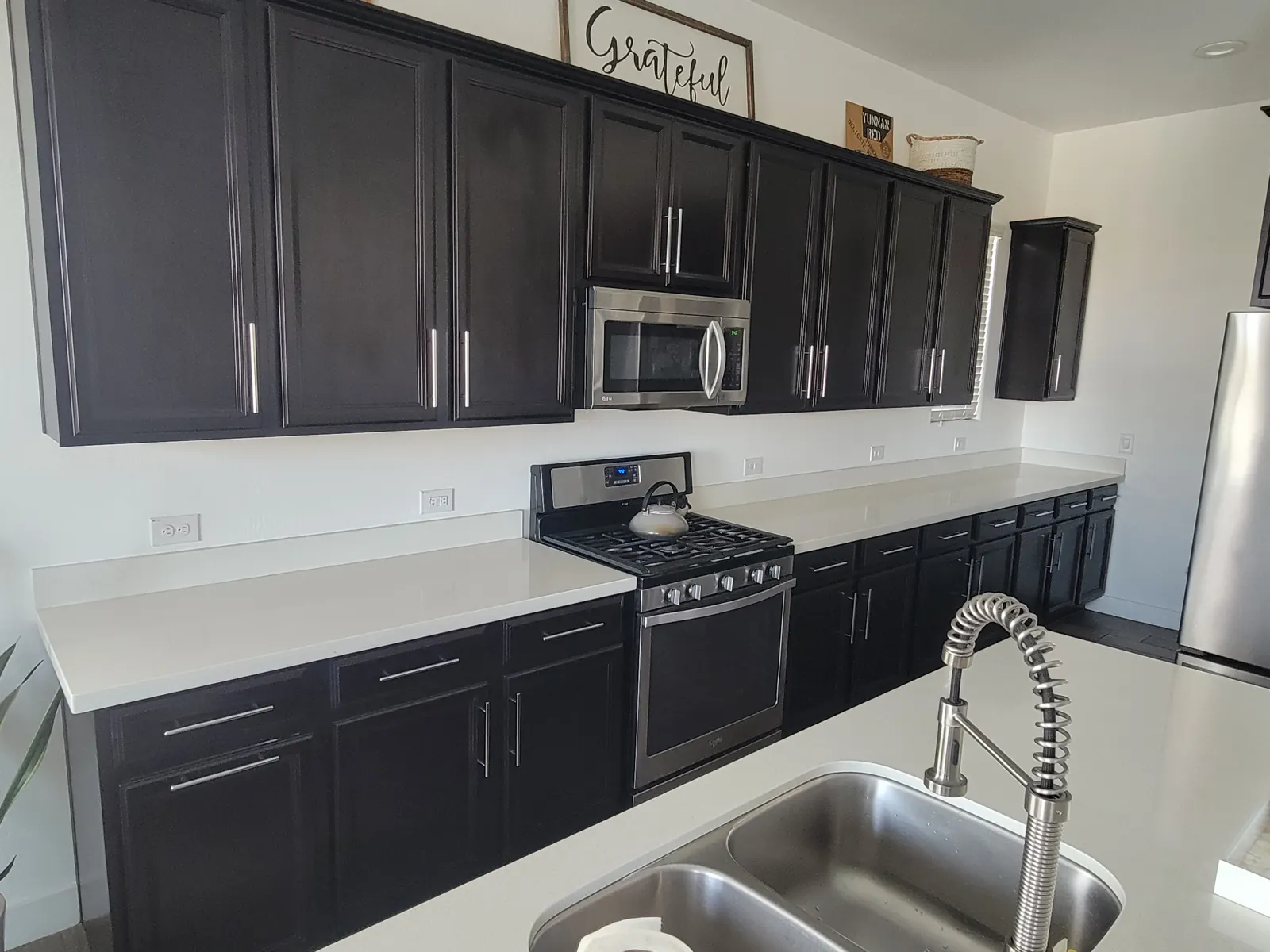
- Cabinet repair and hardware
- Shelving and closet organizers
- Door and window trim
- Wood repair and rot replacement
- Custom built-ins
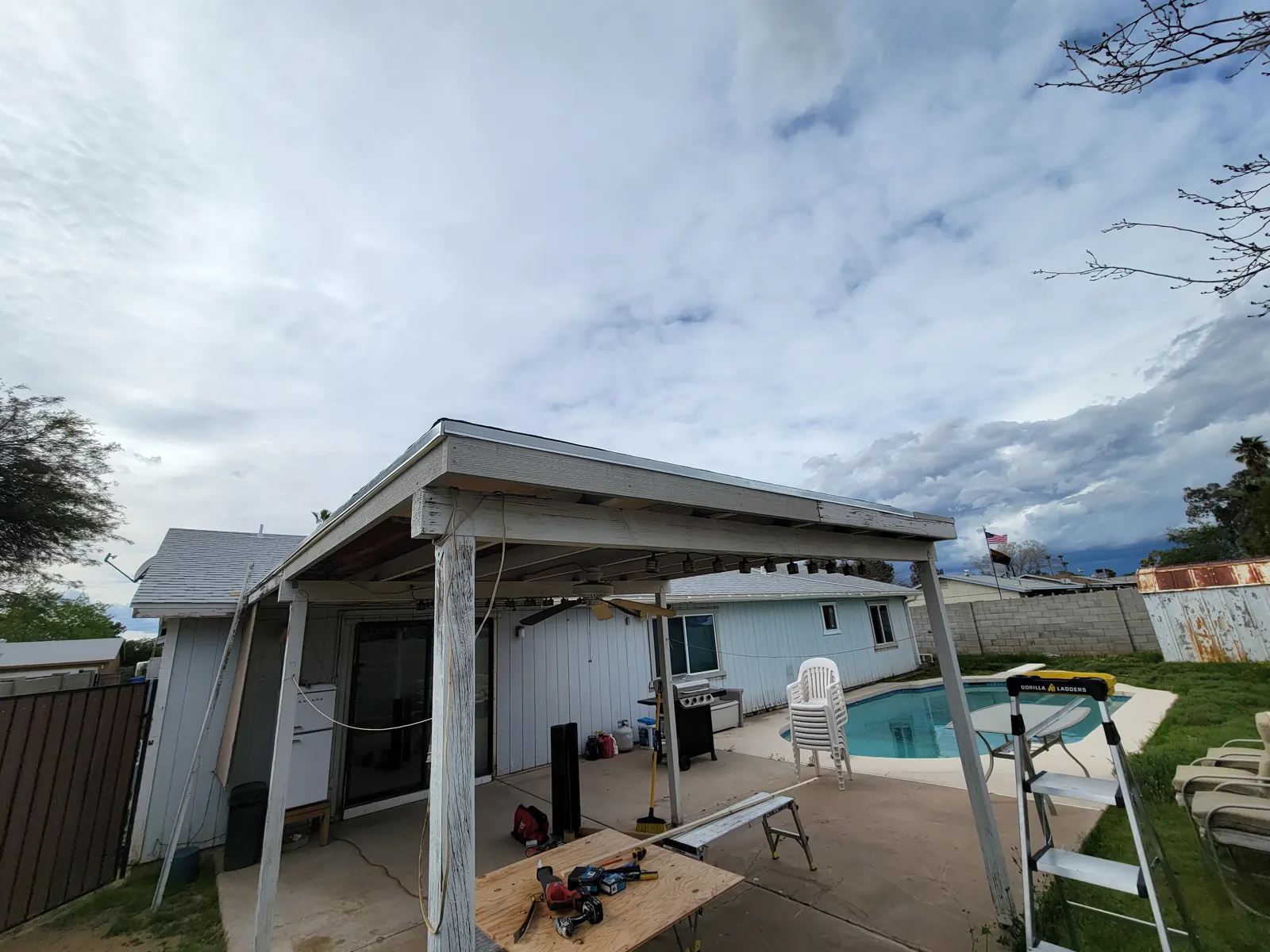
Carpentry for a handyman is mostly finish work: the trim, doors, cabinets and shelves that people live with every day, plus the occasional repair of wood that the desert has worn down. Good finish carpentry is judged by gaps and shadow lines, so this guide explains how we measure, cut and fit, how Arizona's climate treats wood, and where a larger carpentry or remodeling contractor is the better fit.
When trim, cabinets or wood need work
Carpentry problems show up gradually. Baseboards that have pulled away from the wall, a crown molding joint that has opened, a cabinet door that no longer closes flush, a drawer that drags or a sagging shelf are all common. Outdoors, look for paint that peels in long strips, wood that feels spongy when you press a screwdriver tip into it, or boards with deep cracks along the grain.
Rot and insect damage deserve quick attention. Wood that is soft or crumbles means the fibers have broken down, and painting over it only hides the issue while it keeps spreading. Replacing the damaged section and sealing the repair is a far better outcome.
- Gaps along baseboards or at mitered corners
- Cabinet doors that sag, rub or will not stay closed
- Drawers that stick or fall off their slides
- Soft or crumbling wood on fascia, beams, posts or door frames
- Shelves that bow or pull from the wall
Our process for trim and finish work
It starts with measuring twice and checking the room. Walls are rarely straight and floors are rarely level, so we plan the layout around what is actually there. We find the studs, mark the lines, and decide where joints will land so the most visible spots get the cleanest cuts.
Cuts are made to fit the actual angles rather than assumed ninety degree corners, and outside corners are mitered while inside corners are often coped for a tighter fit. We fasten into framing, fill nail holes, caulk the joints to the wall where appropriate, and sand. Finishing is the last step: the work is primed and painted or stained so the trim looks like it was always there.
For cabinets, the sequence is adjusting hinges, tightening or replacing mounting screws, replacing worn slides, and repairing face frames, before any hardware goes on.
We also think about the finish before we pick up a saw. Primed trim paints more evenly, so on larger runs we prime before installation, then fill and touch up after. Door and window casing is set with a consistent reveal around the jamb so the lines look deliberate, and any door that drags is checked for the cause, such as a loose hinge, a settled frame or swollen wood, before we trim anything off it.
How Arizona's climate treats wood
Dry air and strong sun are hard on wood. Exterior beams, fascia, pergolas and door frames dry out, crack and fade, and paint breaks down faster on south and west faces. Moisture still matters: monsoon rain, irrigation overspray and sprinklers hitting a wood post or fence can rot the bottom of a board even in a desert.
Indoors, low humidity can cause joints to open slightly, particularly in trim and in solid wood doors. Seasonal movement is normal, and we choose fasteners, adhesives and flexible caulk accordingly. Sealing every face of replacement wood, including the end grain and the back, is one of the most effective protections, and it is a step that is often skipped.
Repair or replace: how we decide
Not every damaged piece needs to be replaced. Small areas of rot can sometimes be cut out and patched with new wood or a wood-repair compound. A warped cabinet door may be adjusted at the hinges rather than replaced. Where damage runs through a structural member or covers a large area, replacing the piece is the more honest choice.
We also consider matching. Older homes may have trim profiles that are hard to find, and we can often combine stock pieces or mill a close match. If an exact match is not possible, we explain the tradeoff before we cut anything.
Common mistakes and DIY pitfalls
The usual errors are a trim installed straight onto an uneven wall without shimming or caulk, mitered corners cut at a perfect forty-five degrees on a wall that is not square, and nails that miss the studs and let the trim creep away over time. For cabinets, overtightening screws into particle board strips the hole and makes the problem worse.
Outdoors, the big mistake is sealing in moisture: paint or sealer applied over wet or rotted wood traps the problem, and unsealed cut ends soak up water. Choosing interior-grade materials for an exterior location is a close second.
On exterior wood, another slip is leaving the bottom edge of a door or gate bare. That edge soaks up water from irrigation and rain splash more than any other part. A coat of sealer on every face before it goes up is cheap and quick, and it can add years to a repair.
What affects the cost of carpentry work
Carpentry is priced by the work involved and the materials. The amount of trim, the profile and material, the number of corners and joints, the height of the work, and the condition of the walls all matter. For repairs, the extent of the damage and whether a matching piece must be found or milled are the main factors. Painting or staining the finished work is a separate part of the scope that we can include.
Sending photos, rough measurements and a note on whether you want the work painted helps us give a clearer quote.
Reliable timing also depends on materials. Special-order trim or a matching door can add days, so we confirm what is needed during the first visit and tell you what the schedule looks like before we begin.
When a project is bigger than a handyman visit
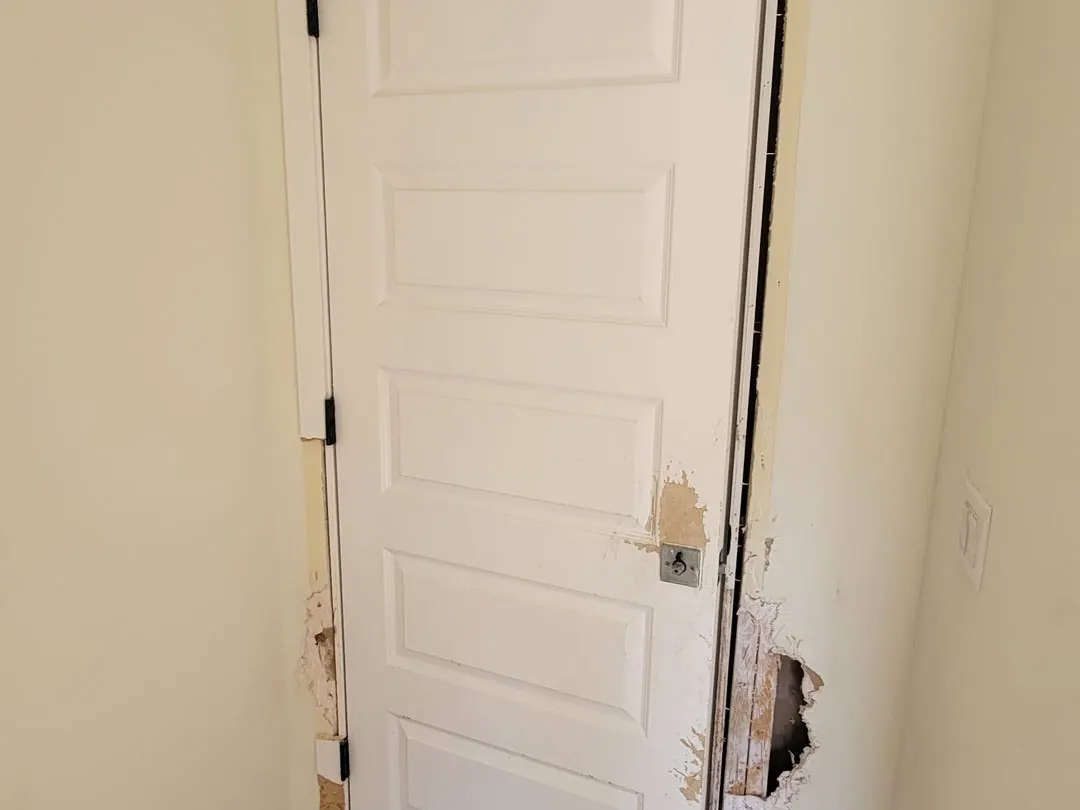
Structural framing, load-bearing wall changes, full kitchen cabinet installations, large decks and extensive custom built-ins can call for a remodeling contractor or a dedicated cabinet shop. Some work also needs a permit. We will tell you plainly where the line is, and we are happy to handle the trim, repairs and finishing details around a larger project.
Carpentry Near You
Pick your city to see how we handle carpentry there.
Frequently Asked Questions
Can you repair kitchen cabinets?
Yes. We fix loose hinges and drawer slides, re-hang doors, replace hardware and repair damaged face frames.
Do you install baseboards and trim?
Yes. We cut, fit, nail and caulk so the finished look is tight, then paint to match.
Can you match my existing baseboard?
Often yes. We bring a sample of the profile to compare against stock options, and when needed we can build up or mill a close match. We will tell you if a perfect match is not realistic.
What causes wood to rot in a dry climate?
Water from sprinklers, irrigation, roof runoff and monsoon storms, especially where wood touches soil or sits where water collects. Sun also breaks down the paint, which lets moisture in.
Can you add grab bars or handrails?
Yes. Secure anchoring into framing is the key point, and we locate the studs or add proper blocking so the bar can bear weight.
Do you build custom shelves and closet organizers?
Yes, within the scope of shelving, closet systems and simple built-ins. For extensive custom cabinetry, we will tell you if a cabinet maker is the better fit.
Recent Work Around the Valley
Ready to check one more thing off your list?
Free estimates. Upfront pricing. 100% satisfaction guaranteed.