
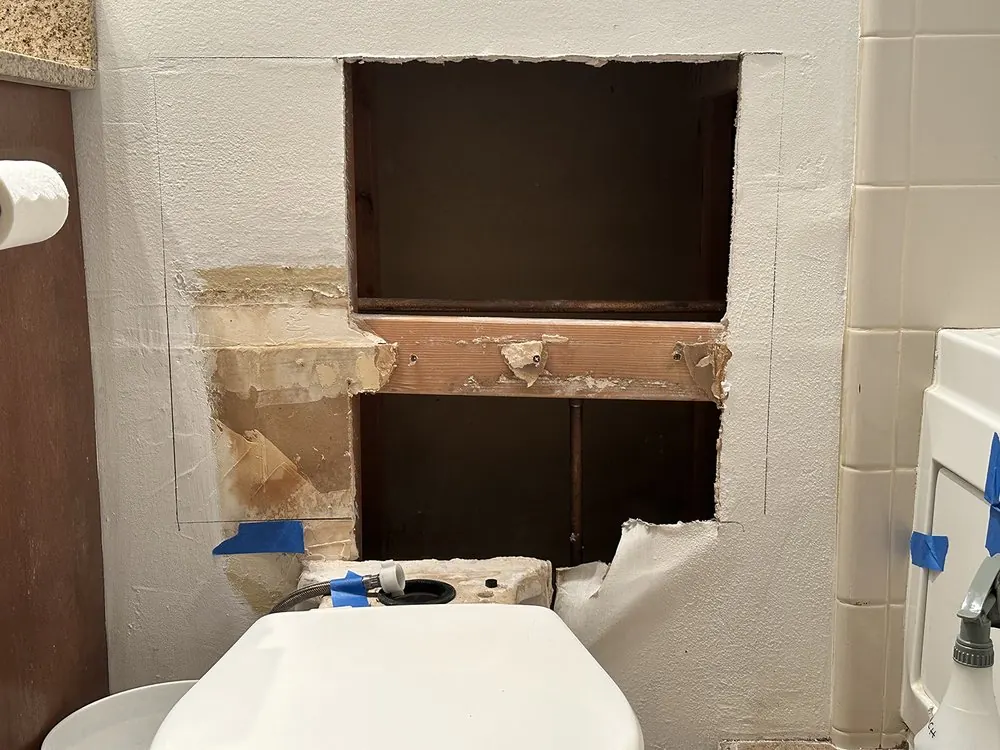
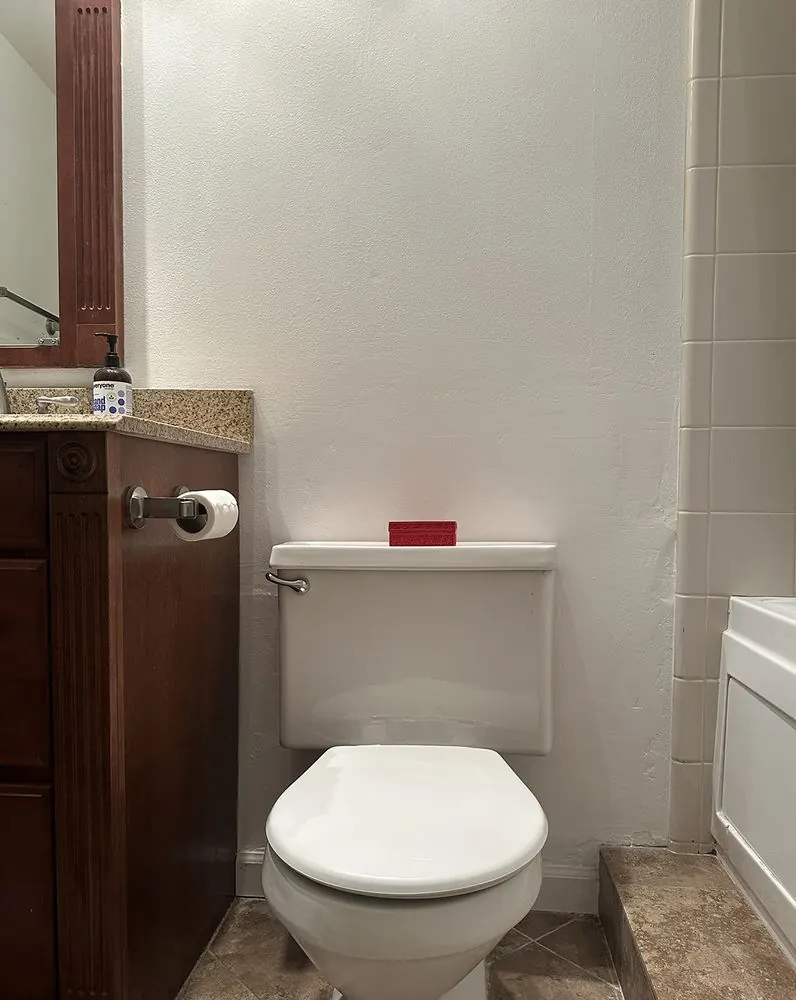
Photos from our own jobs. See more of our work.
What the job involves
Most calls fall into a few groups: a toilet that runs after flushing, weak flush, a leak at the base or the tank, and a rocking bowl. Each has its own cause, and the fix ranges from a new flapper to replacing the whole toilet.
We start by watching it work, then open the tank and look at the fill valve, flapper, handle and supply line.
Sometimes a toilet needs only a cleaning of the rim jets and siphon opening to restore a strong flush. We can do that without replacing anything, and tell you if the toilet is simply too old to flush well.
What we check first
A toilet that runs on and off is usually a worn flapper or a fill valve that needs adjusting. A leak at the base points to a failed wax ring or loose bolts. We dry the floor, flush, and see where water appears before we decide.
We also press on the floor around the toilet. Soft flooring means the leak has been going on a while, and that changes the plan.
- Flapper and chain
- Fill valve and float height
- Supply line and shutoff valve
- Wax ring and flange at the base
Why it matters in Arizona
Hard water leaves scale on the flapper seat, the fill valve and the jets under the rim. That can cause slow leaks and weak flushes. Rubber parts also wear faster in a hot, dry climate, particularly in a garage-side bathroom or a hot closet.
Many older homes have toilets that use more water per flush than current models. Swapping to a modern high-efficiency toilet can cut water use, and the newer ones also tend to flush better.
How a visit goes
We diagnose, tell you what is wrong and what it takes to fix, and give you the price before we start. For a repair, we shut off the water, swap the part and test it. For a replacement, we remove the old toilet, check the flange, set a new wax ring, set the new toilet level, bolt it down and caulk the base.
We haul the old toilet away if you want it gone.
If we replace the toilet, we choose the right rough-in size, which is the distance from the wall to the drain center. Twelve inches is the common size, but older homes can differ, and a mismatch means the new toilet will not sit right.
What affects the cost, and when to call a specialist
A parts swap is a smaller job than a full replacement. A replacement depends on the toilet model, the condition of the flange, and any floor repair needed. Comfort-height or wall-hung styles differ in labor.
A damaged flange or soft subfloor adds work, and we point it out before it is done.
If the toilet clogs repeatedly, several drains in the house back up, or sewage appears in a tub or shower, the problem is likely in the main line, and that needs a plumbing specialist with the right equipment.
“We've had Nathan do several projects for us: installing a ceiling fan, changing out a vanity with a single sink to a dual, and changing a window into a sliding door and all of them were done very professionally with amazing attention to detail. I highly...”